
The Kerala high court has delivered a landmark judgment, empowering Christian women in India to file for divorce from their current place of residence, thereby removing a significant procedural hurdle and ensuring equal access to justice.

This new year will bring, once again, a repetition of both intent and apathy, expects Aakar Patel.

Therefore, a couple that lives together by virtue of an agreement cannot claim it to be a marriage nor seek a divorce based on that, the high court said.

Crucial reforms in Muslim personal law, especially laws related to inheritance and adoption, need to be initiated forthwith; historically speaking, without the State's backing, hardly has any reform taken place or allowed to prevail, asserts Mohammad Sajjad.

If nominees pass away, distribution is governed by succession laws of insured's religion.
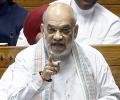
The Lok Sabha passed the Waqf (Amendment) Bill, 2025, with the ruling NDA defending it as beneficial for minorities while the opposition called it "anti-Muslim". All amendments moved by the opposition were rejected and the bill was passed with 288 votes in favor and 232 against. Union Minorities Affairs Minister Kiren Rijiju asserted that India is the safest place in the world for minorities, refuting claims of their insecurity.

Introducing UCC is a challenging task for any government. The complexities are real and difficult to negotiate as it deals with sensitive religious and cultural sentiments. How can it strike an easy balance between individual rights and community interests?, asks Ramesh Menon.

The panel suggested changes in laws relating to marriage, divorce, alimony, and marriageable age for men and women.

He said there is a fundamental distinction between religious practices, rituals and civil rights.
The Centre pleaded in HC that it is waiting for responses from various states over UCC.

Bharatiya Janata Party leader Shazia Ilmi on Friday moved the Supreme Court seeking direction to the Centre to formulate a standardised uniform common code (UCC) for grant of alimony and maintenance to obviate hindrances caused by diverse set of personal laws prescribed by different religions.

Azad said it will affect all religions.

Goa has been following the Portuguese Civil Code 1867, which is also called Uniform Civil Code.
It is a question that his supporters must ask of the prime minister. It may be enjoyable for them to pass through this phase of going after other Indians. But once this has been achieved to satisfaction, then what?, questions Aakar Patel.

Sushmita Dev said it would have been better if there were more women MPs in the panel.

"Under this circumstances, what should we do? Should we allow Muslim women to be continued to be exploited," he said.

The judges in the minority verdict said that if the Centre does not bring a law within six months, then its injunction on triple talaq will continue.

Did you know there are laws made as far back as 1836 still in circulation in the Indian legal apparatus?
Those who continue to think that the 2024 election will see the BJP pursuing a more militant line are being alarmist, argues Rajeev Mantri. The BJP, Mantri believes, is not about to shoot itself in the foot. If anything, he says, the BJP may be more inclined to push a harder secularism.
A revealing excerpt from Rahul Shivshankar and Siddhartha Talya's book, Modi & India: 2024 and the Battle for Bharat.

Wankhede is facing the vigilance probe by NCB after an independent witness in the drugs-on-cruise case, in which Aryan Khan is one of the accused, claimed of overhearing a discussion of a Rs 25 crore pay-off, including Rs 8 crore for Sameer Wankhede.

The plea argued that any changes such as inclusion of same sex marriage in the Customary Law are much easier, convenient and practical in marriages which are a type of contract between the partners as they are very remotely based on religion and more generic in nature.

Opposition members hit out at the government for the introduction of the bill in a 'hurry' and 'without any consultation with stakeholders'.

'By making Rachel Rajeshwari, Tejashwi has done an exemplary thing.'

'This chauvinistic attitude, what they call nationalism in the name of religion, is sad.' 'It is a tragic state that we are all in currently.'

We must heed what the CJI has said. Challenging every judgment of the central government is inviting chaos, asserts Shreekant Sambrani.

When the bench asked Sibal 'shouldn't we hear the matter', he replied, 'Yes. You shouldn't.'

Rohatgi's submission came when the court asked him what are the remedies for a Muslim man to come out of a marriage if such practices are struck down.

A five-judge constitution bench headed by Chief Justice J S Khehar will decide if 'triple talaq' among Muslims is fundamental to the religion.

The unfortunate associations with the name Charles for an English king -- one who was executed; the other with a very unsavoury reputation -- led royal observers to assume that Charles would not take his Christian name when he became king.
A five-judge Constitution bench headed by Chief Justice J Khehar will commence hearing on seven petitions

'You cannot suppress a section of society permanently.' 'The spark of revolt will catch fire sooner or later.'

In a historic move, Pakistan's parliament has passed the much-delayed bill to enable the country's minority Hindu community to register their marriages.

The history of the Cauvery and Mullaperiyar cases has shown how helpless the constitutional processes and judicial verdicts have been in enforcing the law of the land in inter-state and state-Centre disputes, says N Sathiya Moorthy.
Pakistan's Hindus were set to get an exclusive personal law to regulate marriages after the National Assembly unanimously adopted the Hindu Marriage Bill, 2017, on Thursday.

The Opposition had been opposing provisions of the two bills in Rajya Sabha where the government lacks numbers.

It is mischievous to imply that the proposed bill to grant citizenship to persecuted Hindus, Sikhs, Jains and Buddhists from other nations implies that Muslims and Christians are not Indians, says Sanjeev Nayyar.


'The government know very well how to pass a bill in the Rajya Sabha with consensus.' 'They got consensus from Opposition parties on the 10 percent reservation for economically weaker sections.' 'In instant triple talaq, the BJP wanted to take sole credit.' 'They wanted to take credit and see that other parties suffer (political) loss.' 'Therefore, the bill got stuck.'

The VHP leadership notes that 'ghar wapsi' wasn't something started after the Modi govt took over. Archis Mohan reports

''Laws are made for every citizen to get justice.' 'If there is abuse of law, then the law will have its own course correction mechanism also.'
